An administrator, not a general
Gangadharrao Govind, the youngest son of Govind Hari, was born in 1741. His elder brothers Gopalrao and Wamanrao were celebrated soldiers; Gangadharrao’s gifts lay in administration. For many years he managed Miraj while his nephews held the Saranjam and Parshuram Bhau led its troops, and after the division of 1801, when his nephew Chintamanrao founded Sangli, he became head of the Miraj house.
Printing the Gita
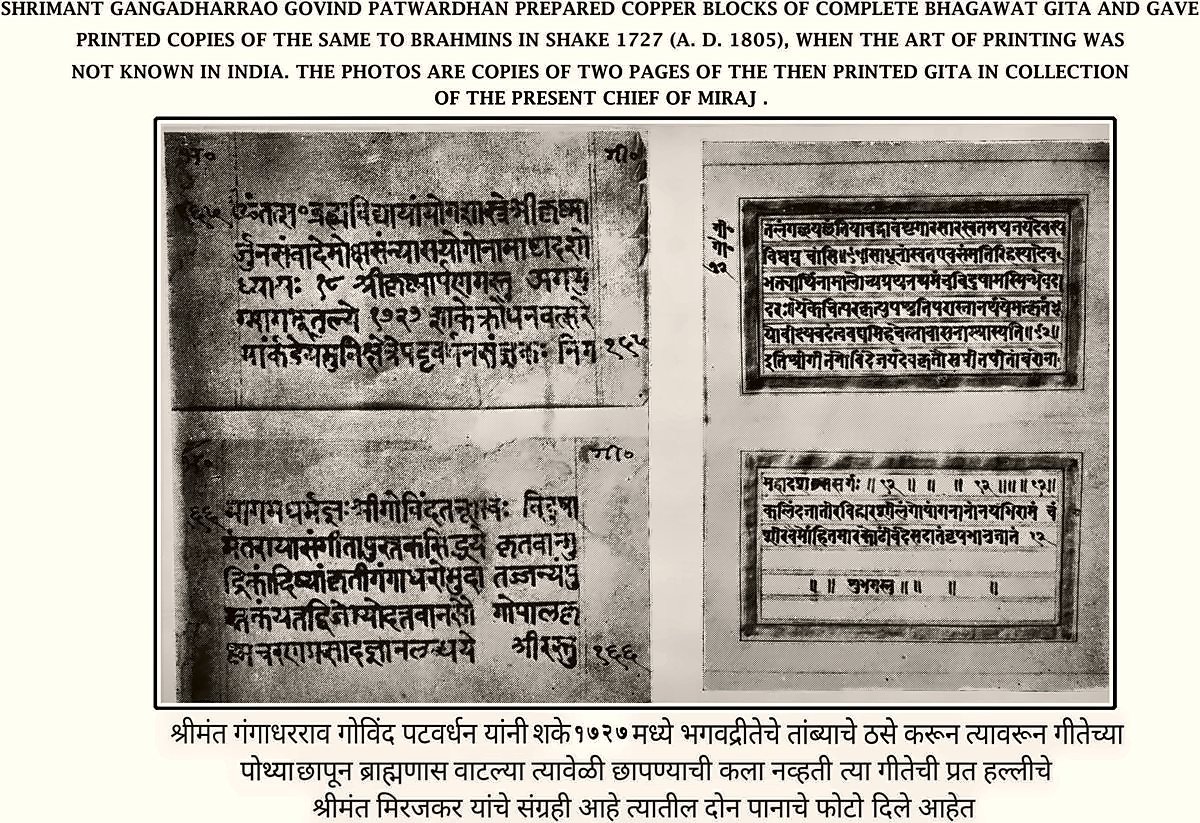
Printing came late to western India. A printing press had reached Bombay as early as 1674, when it was sold to Bhimji Parekh, but little came of it, and in the decline of the Peshwa’s rule almost nothing was printed in the Marathi country. Gangadharrao obtained printing equipment and had copper blocks made of the complete Bhagavad Gita in Devanagari.
In Shake 1727, that is 1805, he printed copies from these blocks and gave them to Brahmins. The family’s State Album records the event and reproduces two pages from a copy that was still in the collection of the Chief of Miraj. It was, as the album notes, a time “when the art of printing was not known in India”.
A treasure from Akbar’s court
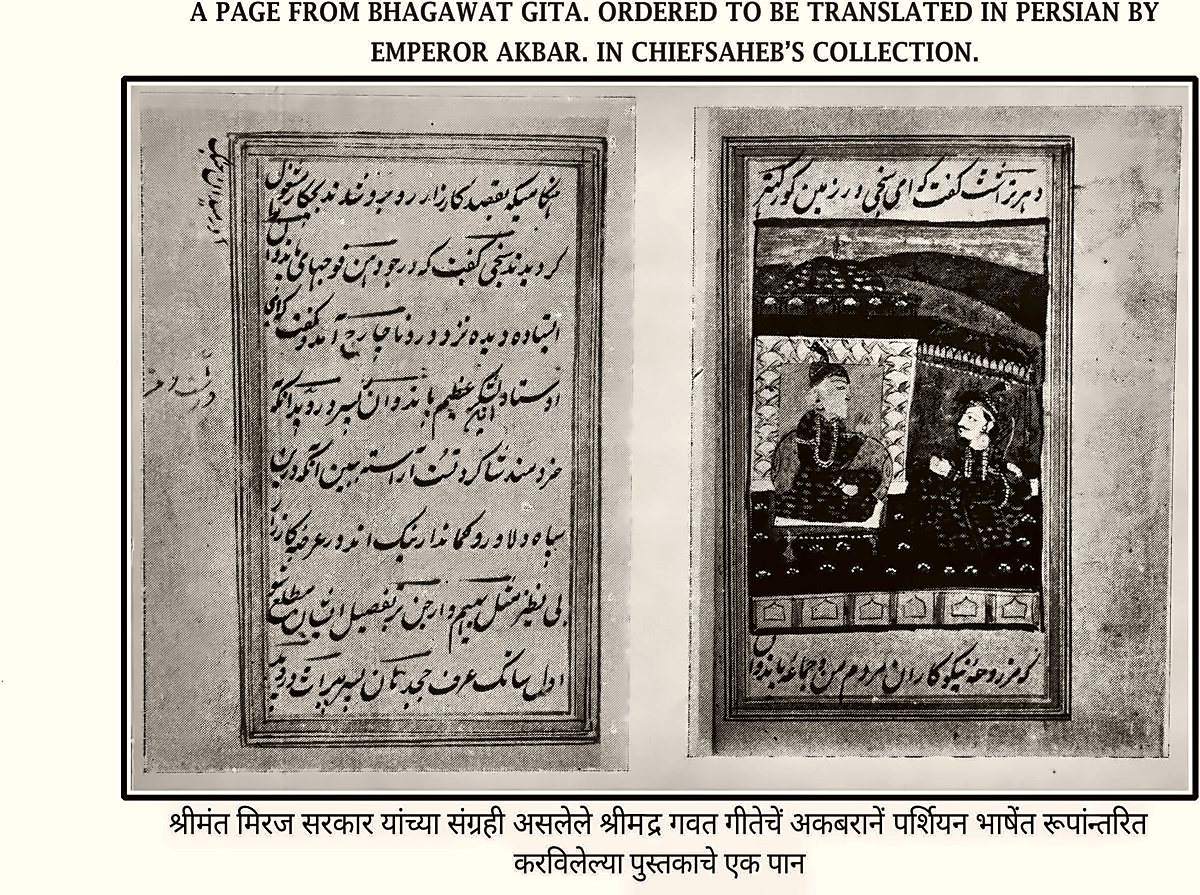
The same collection held a very different Gita: a manuscript of the Bhagavad Gita translated into Persian by order of Emperor Akbar. A page from it, with a painted illustration, appears beside the Miraj print in the State Album.
Coins, temples and a ghat
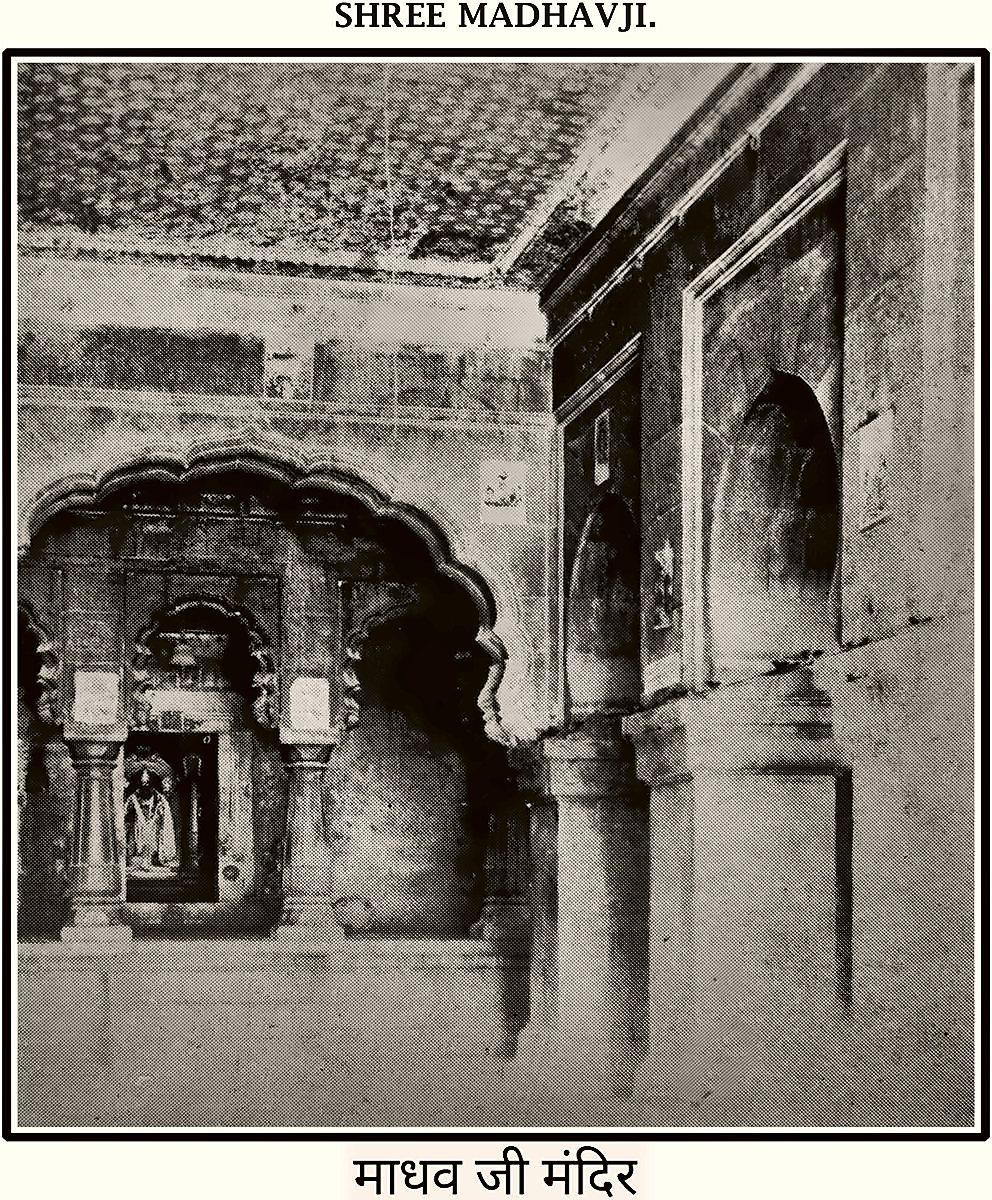
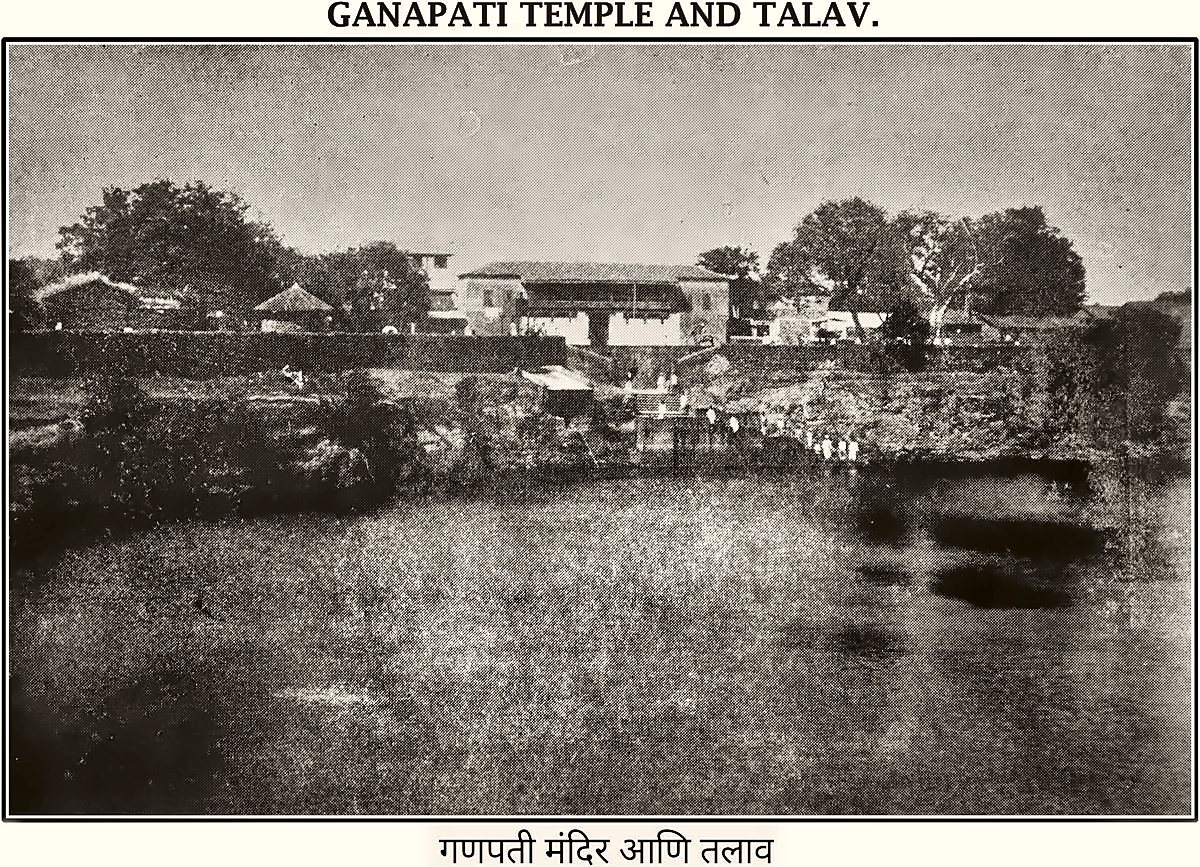
Gangadharrao also set up a mint at Miraj, whose coins were known as the Miraj Agyyari. He built a ghat on the Krishna and the Madhavji Mandir in the fort, and in 1799 he built the Ganesh Mandir and its tank at Ganesh Peth at a cost of Rs 40,000. The temple and talav remain at the heart of the family’s Ganeshotsav today.
His time also saw the settlement of the Patwardhan domains. The Peshwa recognised his rights over Miraj in 1808, and the agreement brokered by the British Resident in 1812, the Treaty of Pandharpur, was recognised in 1817 and supplemented by treaties with the East India Company in 1819. His son Narayanrao succeeded him on the Gadi of Miraj.
Sources
- Gangadharrao Patwardhan, A Short Sketch of the Patwardhans, ed. Madhavraje Patwardhan, chapter on Shrimant Gangadharrao Govind (I)
- The Miraj State Album, plates of the printed Gita and the Persian Gita