The house behind the battlefield
The story of the Patwardhans is usually told through its men: Govind Hari at the siege of Miraj, Gopalrao against Hyder Ali, Parshuram Bhau at Kharda. For most of the eighteenth century those men spent the better part of every year in the field, from Malwa and Bundelkhand to the plains of Karnataka. At Miraj, the household, the family’s worship and its charities were in the hands of its women.
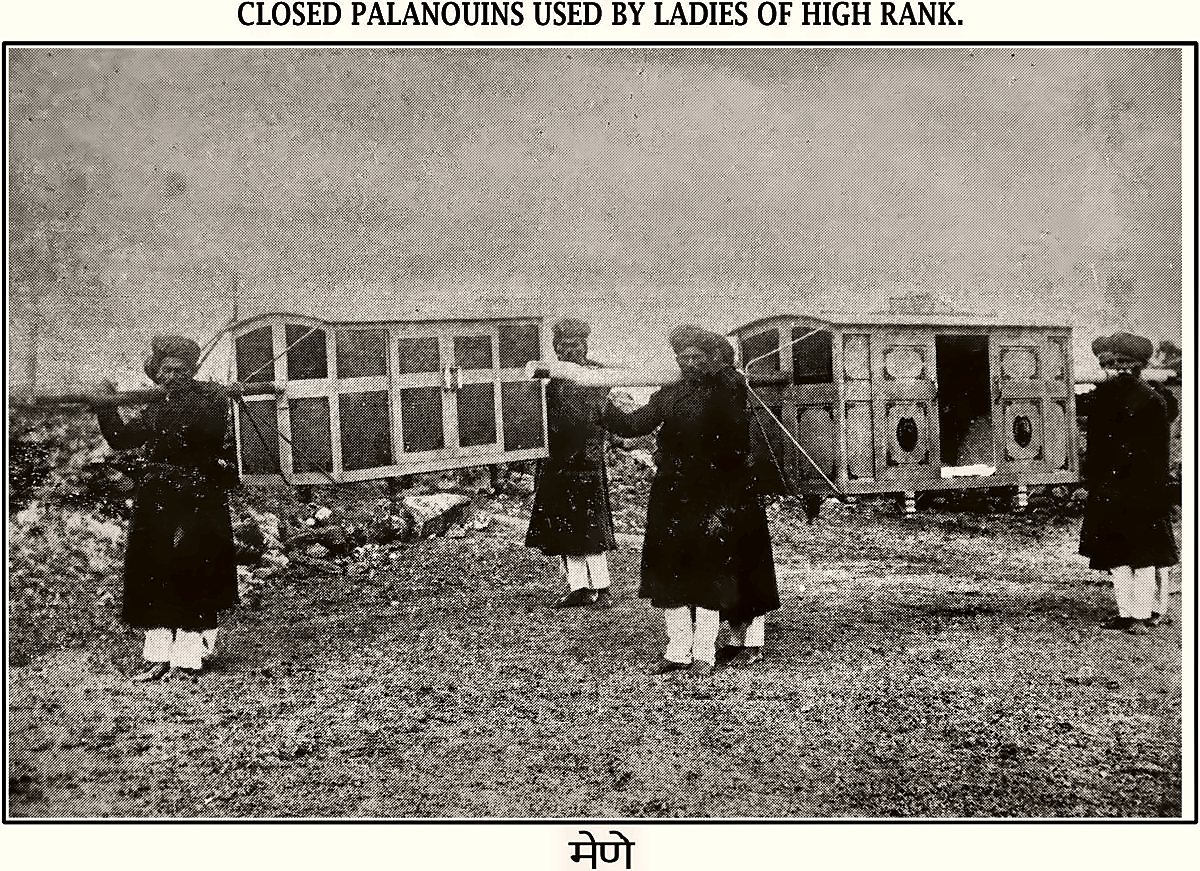
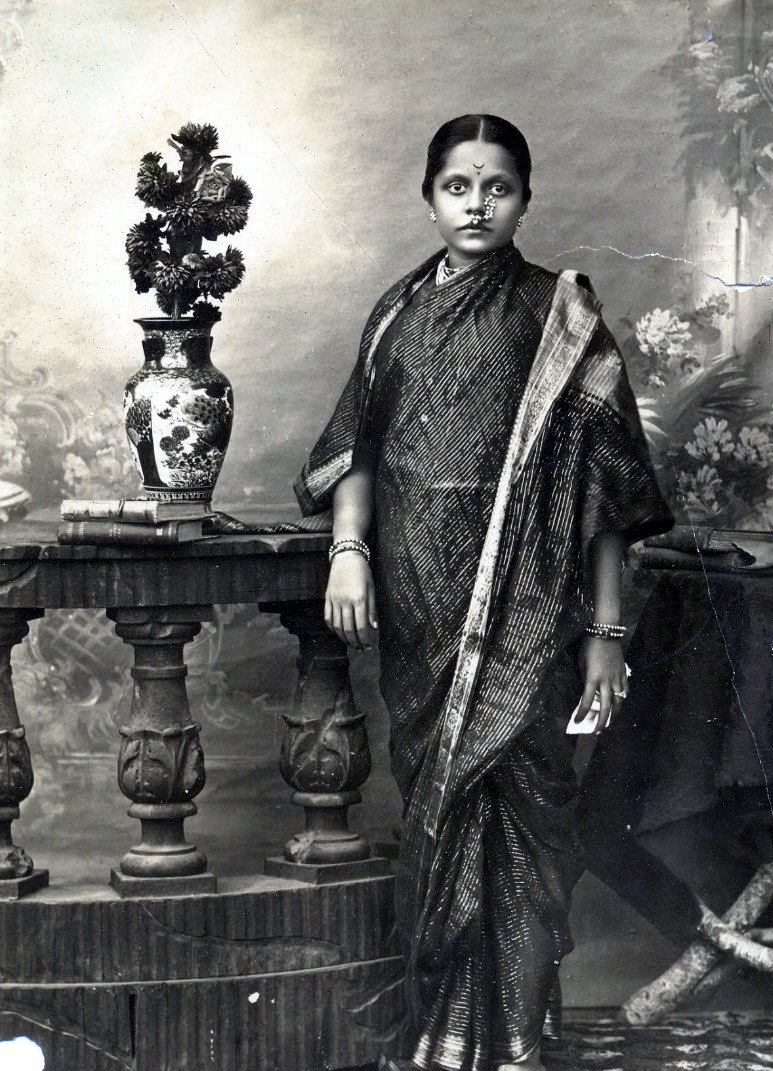
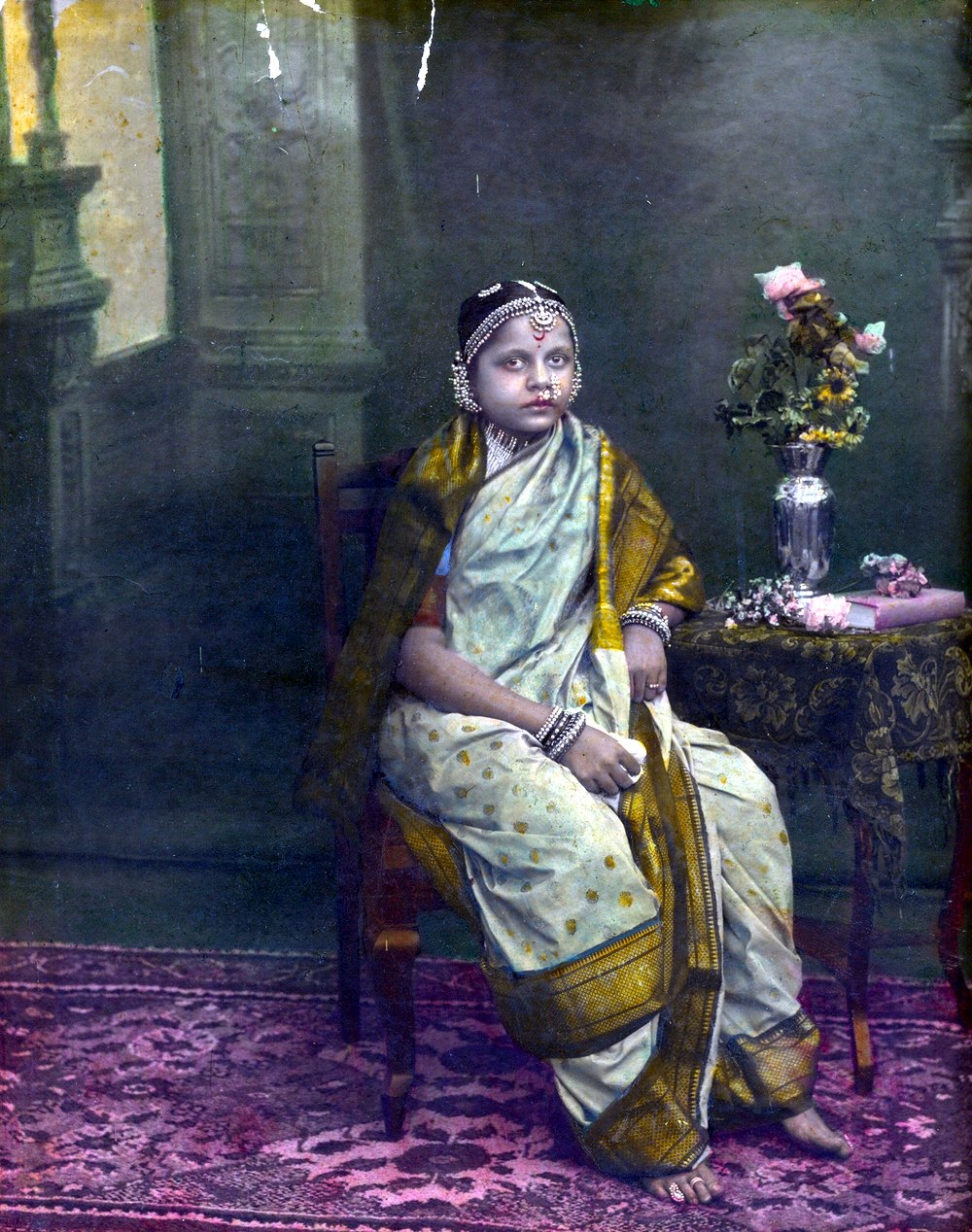
Ladies of rank lived in purdah. They travelled in closed palanquins, the mene that still appear in the family’s State Album, and their names rarely entered the dispatches and treaties from which history is written. What survives is often a single line: a family name, a marriage, a child. Yet as the State grew into a modern one, the Ranisahebs of Miraj became public figures in their own right, and much of what they left behind is service to the people of the town: schools, clubs, prizes and causes that outlived them.
Shrimant Sou. Satyabhamabai and the founding generation
Shrimant Sou. Satyabhamabai, of the Patankar family, was the wife of Govind Hari. When Peshwa Madhavrao I granted Miraj to her husband in 1761, she became the first lady of the new house. Her sons Gopalrao, Wamanrao, Pandurangrao and Gangadharrao between them held or managed the Saranjam for the next half-century, and every later ruler of Miraj descends from her.
Her life spanned the family’s hardest years. Within two decades she would see the siege of Miraj by Raghunathrao’s army, the death of her eldest son Gopalrao on campaign, the early death of Wamanrao, and the capture of Pandurangrao by Hyder Ali.
Shrimant Sou. Ramabaisaheb and Shrimant Sou. Gangabaisaheb
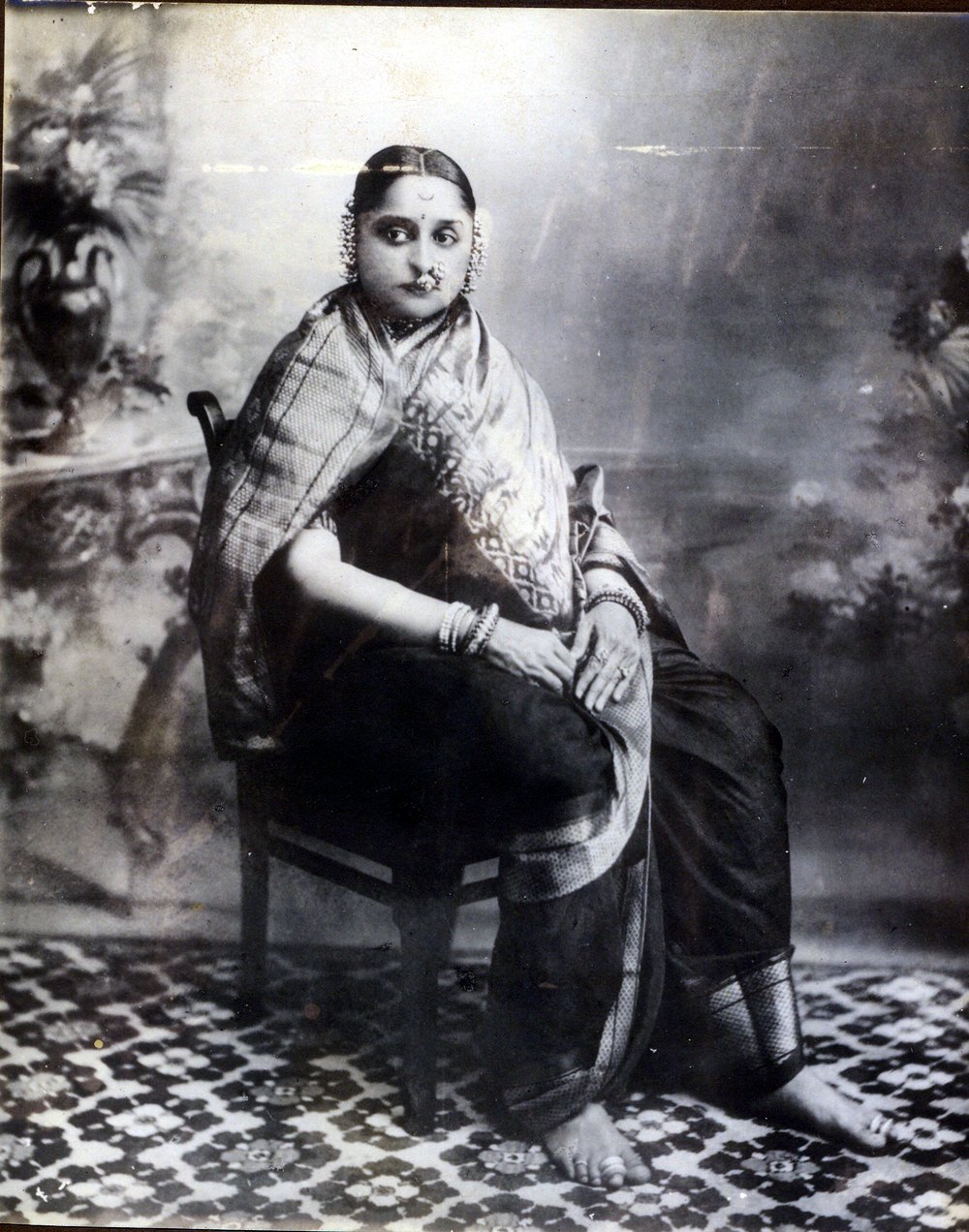
Through the nineteenth century the family records name the Ranisahebs but say little more of them. Shrimant Sou. Ramabaisaheb was the wife of Shrimant Gangadharrao Balasaheb II (ruled 1833–1861). Shrimant Sou. Gangabaisaheb was the wife of his successor, Shrimant Ganpatrao Tatyasaheb II, who opened the State Hospital at Miraj in 1864 and was the first of the family to be photographed. Shrimant Sou. Gangabaisaheb’s own portrait, one of the earliest in the family collection, survives.
Shrimant Sou. Umabai Saheb: a Ranisaheb remembered in schools
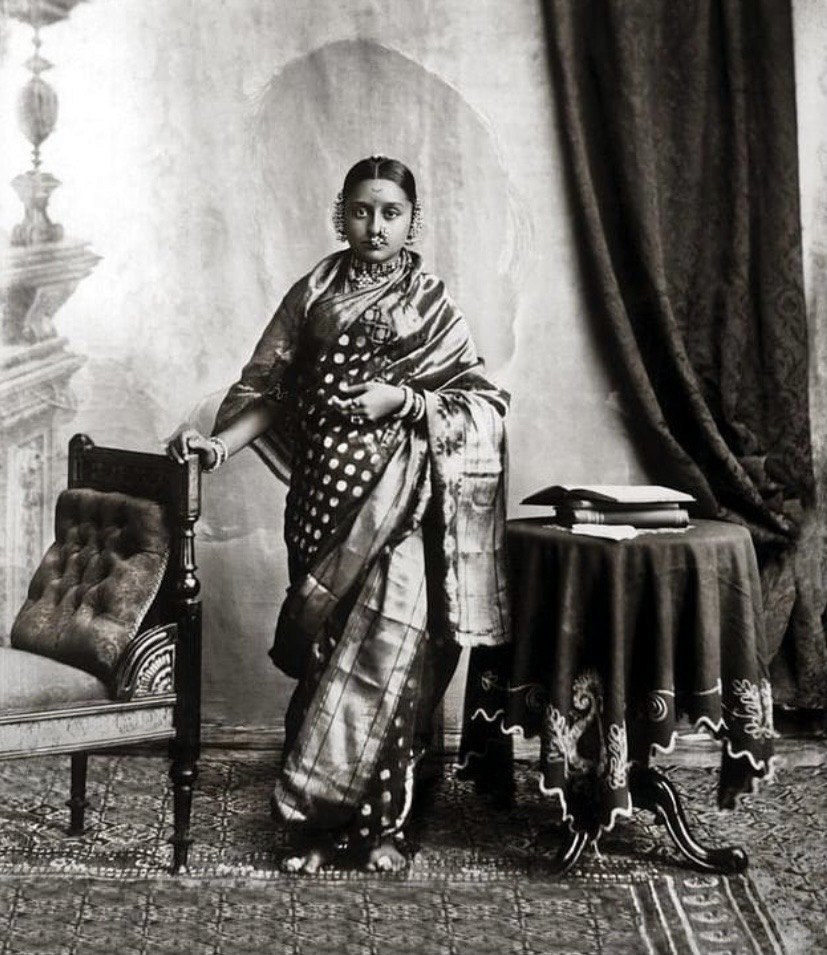
In 1881 the young ruler of Miraj, Shrimant Gangadharrao, then sixteen, chose from among eight proposals of marriage that of Haripant Joag, a supervisor in the Public Works Department at Sholapur. His daughter Durgatai, born on 20 August 1873, had been to school and could read and write, which was uncommon for girls of her time. On her marriage she took the name Umabai Saheb and became Ranisaheb of Miraj.
She was the mother of the heir, His Highness Narayanrao Tatyasaheb Maharaj, but she died young. His Highness Shrimant Sir Gangadharrao, who did so much for learning in Miraj, chose schools as her memorial, so that her name would serve the children of the State. The Uma Vidyalaya at Modnimb, founded in 1919, had a special branch for agriculture, because Modnimb was a farmers’ town; a second Uma Vidyalaya was opened at Laxmeshwar, in the building of the Laxmeshwar Municipality.
Shrimant Sou. Laxmibaisaheb: the market, the Vanita Samaj and the written word
Her Highness Shrimant Sou. Laxmibaisaheb Maharaj was born Durgatai Apte in Ahmedabad on 31 January 1905. Her father, Krishnarao alias Kakasaheb Apte, was a landholder of Limb near Satara who had trained at the Victoria Jubilee Technical Institute and managed textile mills at Sholapur, Amalner and Ahmedabad. In 1918 she married the Yuvaraj of Miraj, and in 1939, when he came to the Gadi, she became Ranisaheb.
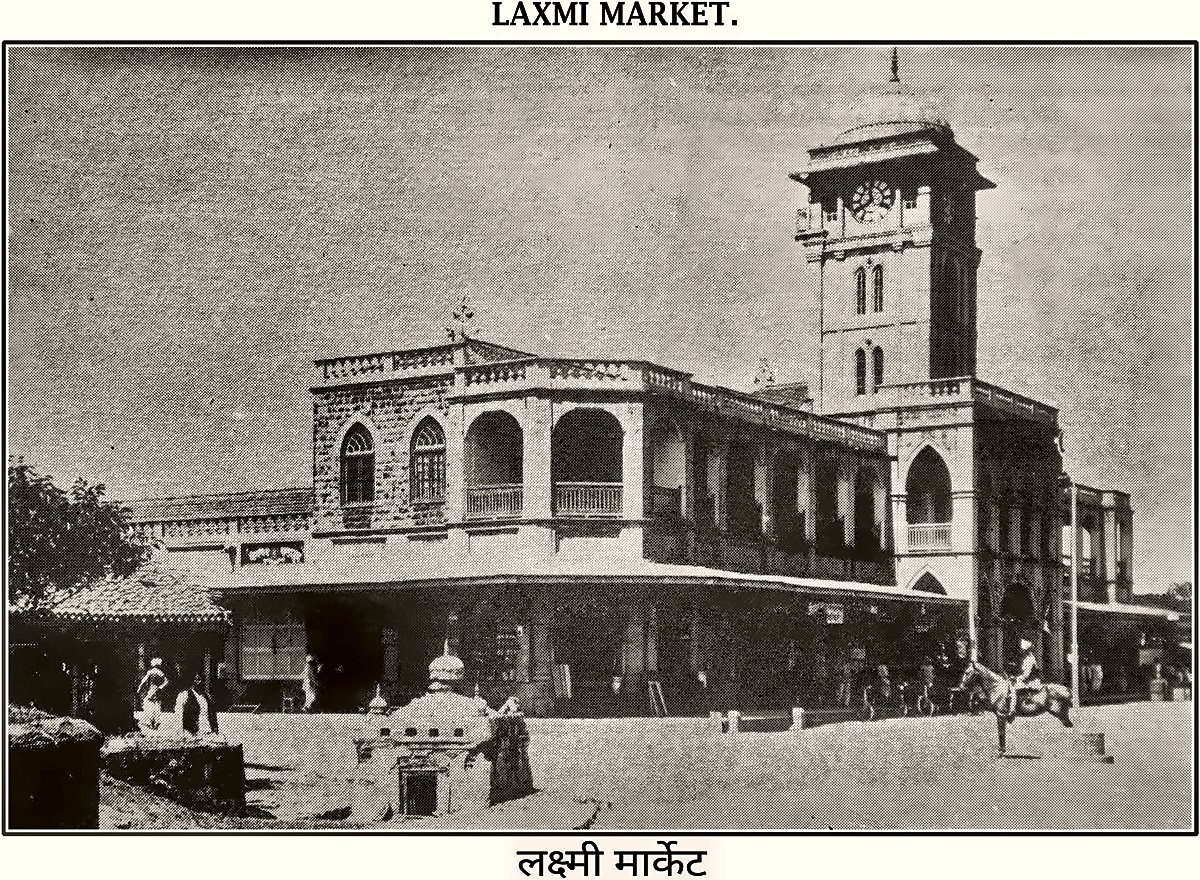
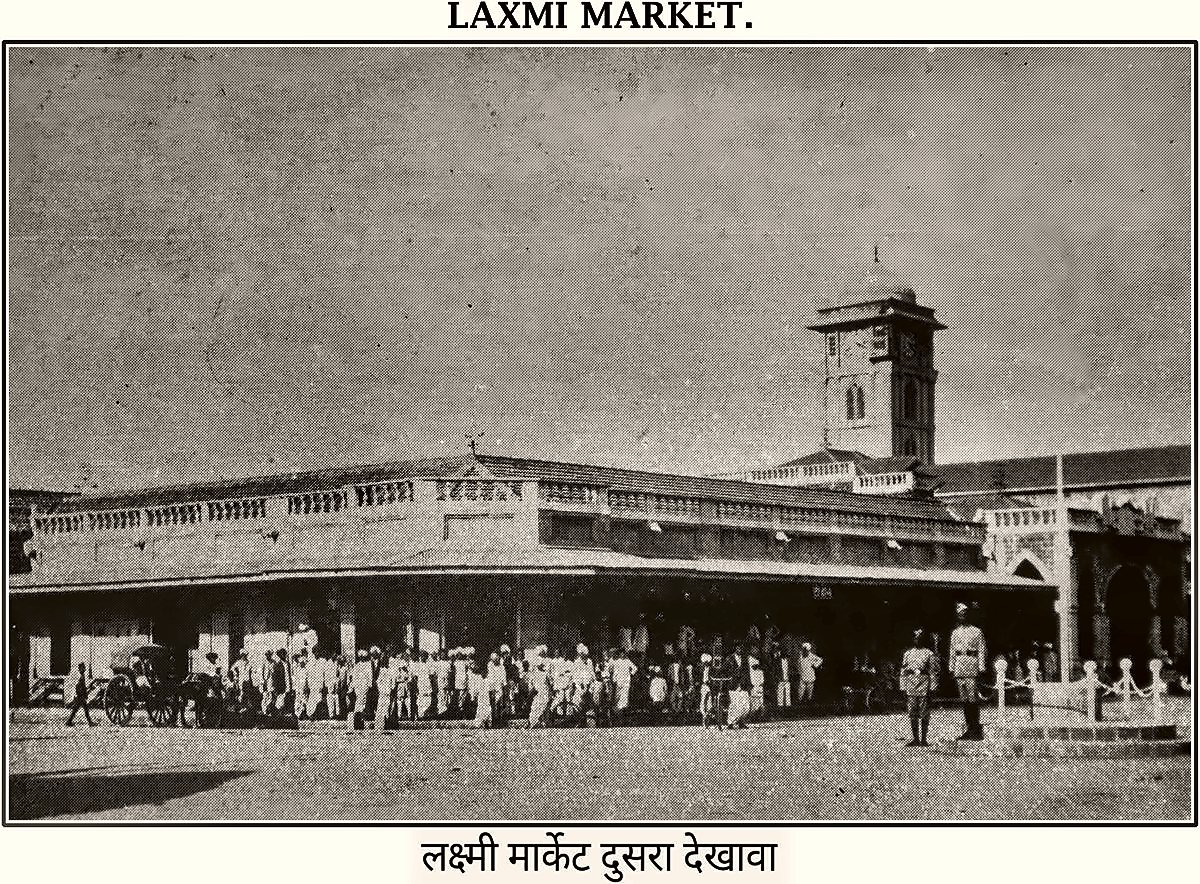
Her name stands at the heart of the town. The Laxmi Market, the great covered market with its clock tower that her husband began as Yuvaraj in 1930 and opened in 1932 for the traders of Miraj, is named after her. It is still the town’s best-known landmark.
She was the first lady of Miraj in its last years as a State and in the decades after the merger of 1948, and she used her position for letters and for the women of the town. She founded the Vanita Samaj in Miraj Killa, a club where women could meet, play chess and bridge and take part in public life. She wrote short stories that were published in magazines and a book on knitting, and a kirtan she composed was broadcast on All India Radio.
The family remembers her as its eldest matriarch. Her granddaughter-in-law later instituted the Rani Laxmibaisaheb Trophy for Debate in her name, so that schoolchildren could find their voice as she had found hers.
Shrimant Sou. Indumatiraje: a patron of the arts
Her Highness Shrimant Sou. Indumatiraje was the wife of His Highness Yuvraj Madhavrao Raosaheb Maharaj and the mother of the present head of the family, His Highness Balasaheb Maharaj. A patron of the arts, she is remembered with Shrimant Sou. Laxmibaisaheb as one of the two ladies whose love of music and painting shaped the next generation of the house.
Shrimant Sou. Umaraje: a teacher for fifty years
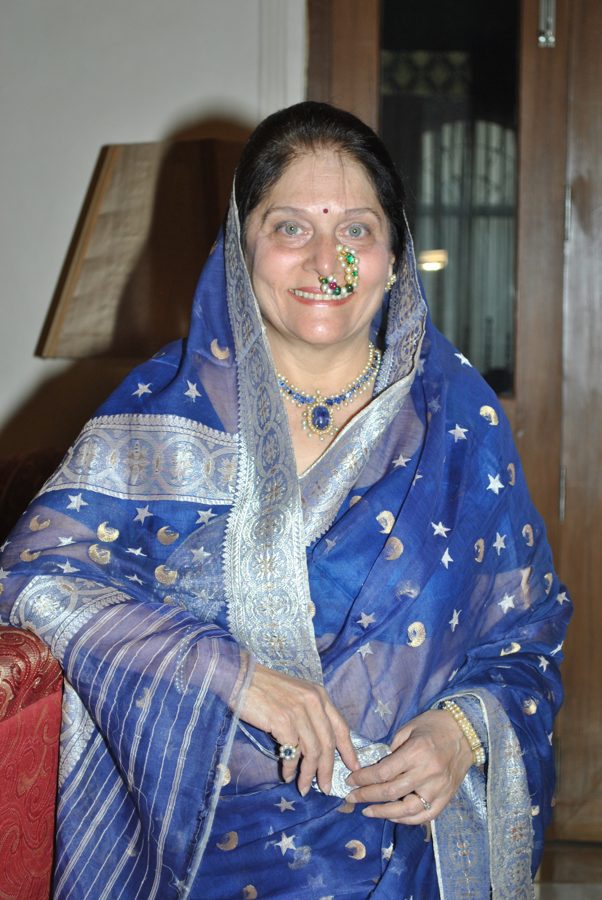
Her daughter-in-law was Her Highness Shrimant Sou. Umaraje (1952–2024). Born in Pune and schooled at the Maharani Gayatri Devi School in Jaipur, she married into the family in 1969 and the same year founded Blue Bells Nursery School in Pune, one of the city’s earliest stand-alone kindergartens, which she led for more than fifty years. She completed degrees in economics and education after her marriage, taught communication and leadership at FLAME University and other colleges, and set up a finishing school and training academy in Miraj to give young graduates the skills for work and life.
Her causes reached beyond the classroom. She instituted the Rani Laxmibaisaheb Trophy for Debate to give children a platform to speak, and she encouraged her grandson to start an animal health drive that vaccinated more than a hundred dogs in a single campaign. She could recognise and sing more than fifty ragas and painted with passion in her later years, crediting her mother-in-law, Shrimant Sou. Indumatiraje, and Shrimant Sou. Laxmibaisaheb before her.
A tradition of service
Taken together, the Ranisahebs of Miraj left a record of quiet public service: schools for the children of farming towns, a club for the women of the fort, a market for its traders, a prize for young speakers, a school for young children in Pune and care for the town’s animals. The tradition continues today. The Yuvaranisaheb of Miraj, Her Highness Shrimant Sou. Anusayaraje Madhavraje Patwardhan Maharaj, serves as a trustee of the Rajasaheb of Miraj Foundation, which runs the Ganesh Talav Cleaning Drive and Yuva 360 Legal. Her work is described on The Family page.
Sources
- Gangadharrao Patwardhan, A Short Sketch of the Patwardhans, ed. Madhavraje Patwardhan, chapters on Govind Hari, His Highness Shrimant Sir Gangadharrao and His Highness Narayanrao Tatyasaheb Maharaj
- Mansinghrao Kumthekar, article in Tarun Bharat on the marriage of Shrimant Gangadharrao, as cited in the family’s records
- Biographical note on Her Highness Shrimant Sou. Umaraje Patwardhan, family records
- Portraits from the family collection; the Miraj State Album